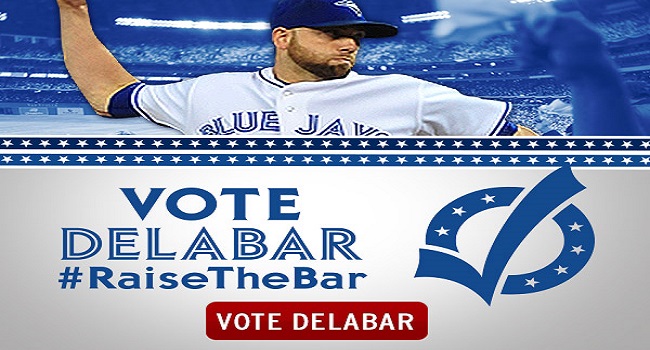
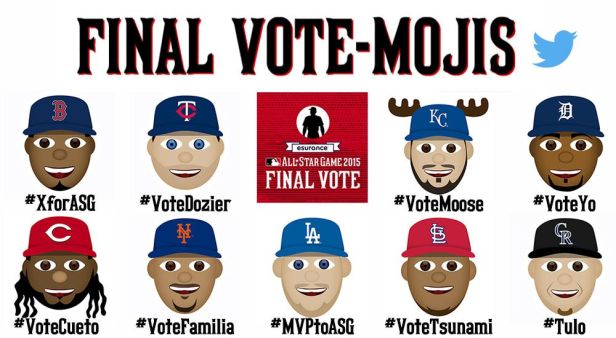
Major League Baseball first toyed with the idea of allowing fans voting to elect the “all-stars” of the league in 1947. Larger market teams in urban areas with more fans dominated the votes, and generally they still do. Starting in 2002, Major League Baseball launched the “Final Vote” campaign, which offered the last spot on each teams’ roster up for grabs, from a select few final qualifiers. The image above was designed by the Toronto Blue Jays in order to try and elevate its Steve Delabar to the All-Star Game. This campaign has been a huge success because it has kept the fans at the center of decision making in the game. An interesting aspect of the final vote is that it has basically emerged into an annual all-out social media war in order to garner as many votes as possible. The MLB within the past 10 years has created a rule that requires there to be an all-star representing each team. The rule was created so that the game was more inclusive for all fans, not just those in big markets. Social media accounts run by the teams themselves create catchy slogans and try to engage as many fans as possible. Instant polls, hashtags, and trending news helps give the fan more knowledge and access to the game. Votes can actually be cast by simply posting a hashtag on Twitter, or other social media sites, which has led to record setting vote totals every year. Interestingly, the final fan vote has basically turned into a social media popularity contest. This is not just something going on only in Major League Baseball, as most other sports have incorporated a form of fan evaluation into the structure of their leagues. For example, the NBA allows fans to vote online for what matchup they want to be nationally televised on specific weeknights. The MLB has really targeted young fans with creative slogans and products like shown below.
 Fan Engagement in sports